I'm just going to state the obvious up-front: engineers love tools. We collect them, we label them, we argue about them, and we usually know exactly which one we need (just as we realize we don’t have it on us!).
But one of the most useful engineering tools you already own probably buzzed with a notification while you were reading that sentence - your smartphone.
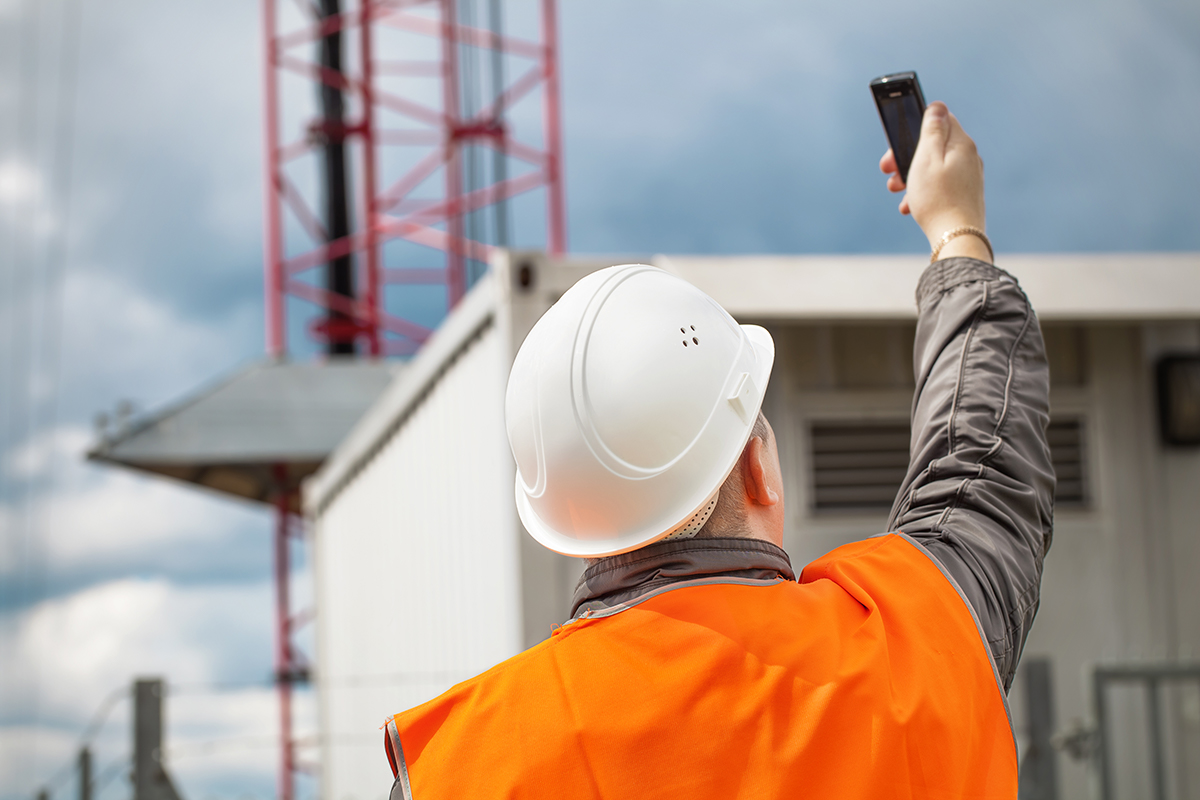
Your phone won’t replace a calibrated spectrum analyzer, a multimeter, or that ancient, crusty Ungar de-solderer you refuse to throw away. But when you’re at a transmitter site, in a rack room, or on a rooftop trying to track down a problem, your phone can be a surprisingly good friend.
With that in mind, here are a few things we've found recently that can turn your pocket pal into a life-saver (maybe literally).
It's a Metal Detector
Did you know that most smartphones include a magnetometer? It's the sensor that powers your phone's compass, but with the right app, that sensor can also act as a simple metal detector.
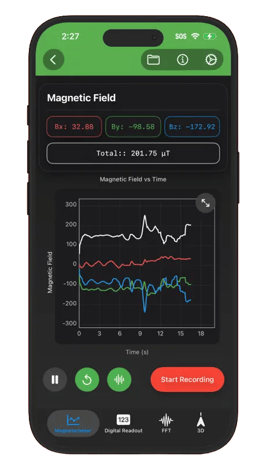 |
The Physics Toolbox app for Apple and Android phones lets you directly access all of the internal sensors on your device - including the magnetometer, which means that your phone can help with things like finding buried ground radials, locating hidden conduit, pipes, or cable runs, or just confirming that there’s something metallic under the soil before you dig. You can find a good explainer on how this works (and how to try it) at this link. Is it survey-grade? No. Is it better than guessing with a shovel? You'd better believe it. |
It's a Hot-Spot Finder
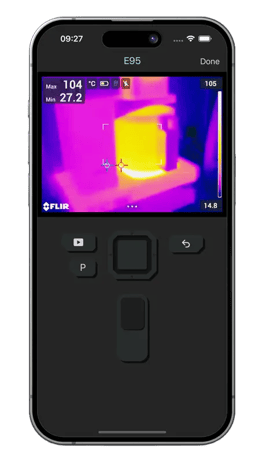 |
This one requires hardware as well as software, but it's very cool. If you pair your phone with a thermal camera accessory and an app like FLIR Tools Mobile, and suddenly you can see temperature differences that might otherwise have passed you by. It’s like having a non-contact IR thermometer and a thermal camera in your pocket, without hauling full-size gear up a dirt road. Not a lab instrument, but a very effective early-warning system and diagnostics tool. |
For engineers in the field, that opens up some very practical uses. Think about spotting thermal hotspots in RF transmission lines, finding overheating rack equipment or power supplies, or even spotting components under stress before they fail.
It's a basic Spectrum Analyzer / SPL Meter
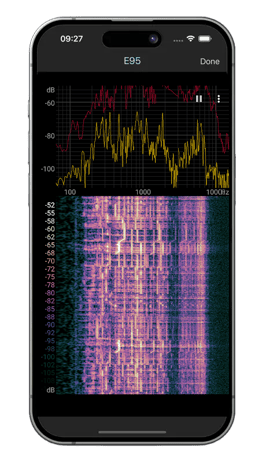 |
The built-in mics in today's smartphones are pretty good, and there's no shortage of apps that let you use your phone for spectrum analysis and loudness metering. A couple I've found are the Audio Spectrum Analyzer for iPhone, and Spectroid for Android. These are great for tracking down common annoyances like hums, buzzes, or missing frequency bands, spotting AC induction in a signal chain, or getting a rough SPL check when someone insists “it’s not that loud” (think: remote broadcast setups in 'live' spaces). Are these tools calibrated? No. Are they still useful? Very! |
It's a Network Analyzer
Everything's IT-related these days, right? If you're wondering “is it dead or just ignoring me?”, and if your AoIP network has a WAP (like many do these days), that quick confirmation can save a lot of unnecessary cable-tracing. A compact network analyzer in your pocket could give you the answer quicker than you could boot your laptop.
There's no shortage of free network analysis tools for your mobile that let you ping devices, scan IP ranges, check basic reachability, and analyze Wi-Fi congestion (for when the GM can't pull up his Spotify stream), but some of the higher-end apps are also pretty affordable. I like the Fing Network Scanner (available for Android and iPhone).
Emergency SOS: When There Are No Bars
Finally: your phone could be a literal lifesaver. Many newer smartphones now include emergency SOS via satellite, a feature designed specifically for situations where there is no cell tower around and you need help. (If you've ever been up a mountainside with a dead vehicle, or out in the back-country staring at something large, furry and angry, you know what we're talking about.) It's worth confirming that the phone you've got supports this feature.
This isn’t a full satphone, of course; it’s a low-bandwidth emergency link that lets you share your location and send an SOS message when you’re injured or stranded. You hope you never need it, but if something goes sideways while you’re working solo, having a last-resort safety net in your pocket is a literal lifeline.
Final Thoughts
Our smartphones can't replace proper test gear, nor should we expect them to. But broadcast engineering has always been about solving problems with what you have, where you are, under time pressure. Having a handy phone app on your hip could save you a lot of time (and make you look like a hero to boot).
Got a favorite phone trick or useful engineering app to share? Drop us a note - we'd love to hear about it.
More Topics: Broadcast Engineering, tech tips, 2026